
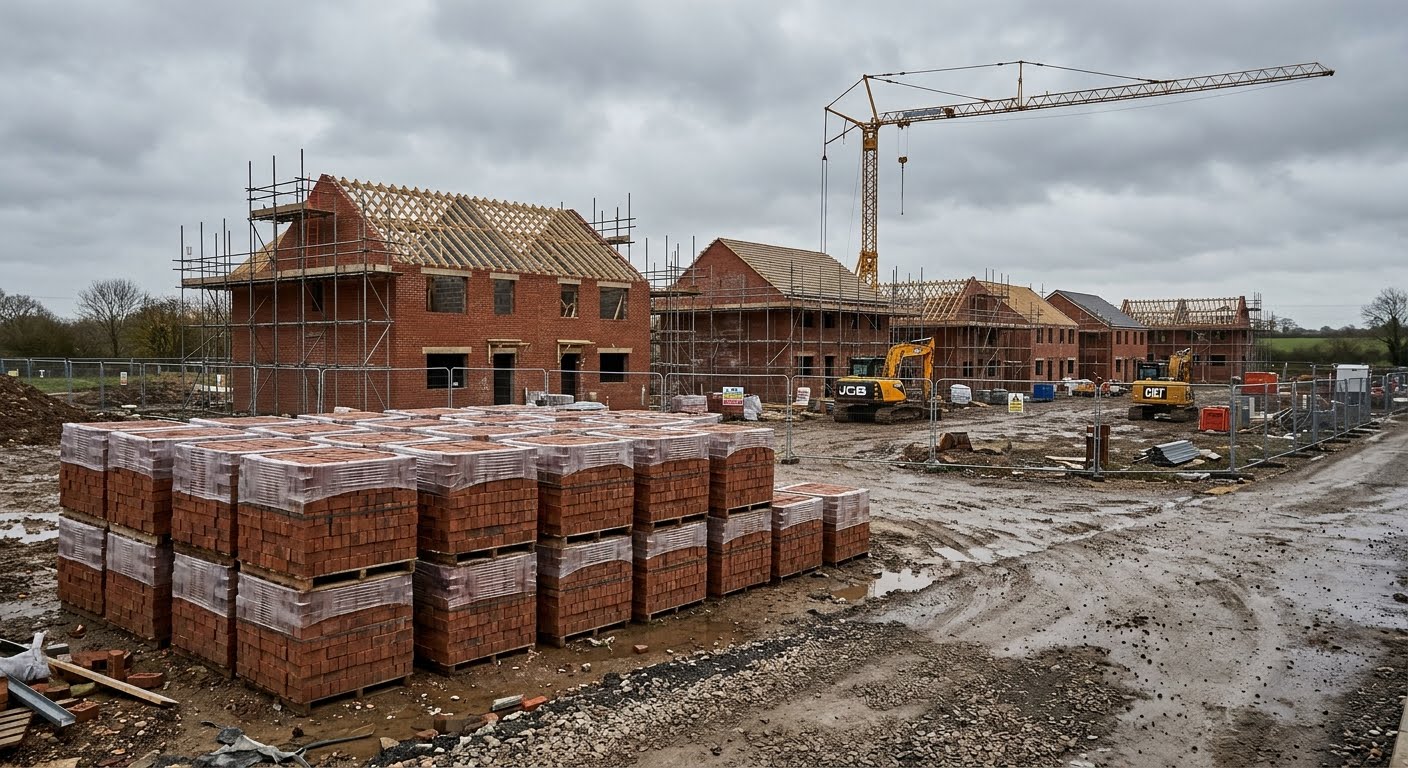
The company, one of the UK's major brick manufacturers, reported that UK brick market volumes fell by approximately 17% year-on-year during July and August 2026. Its third-quarter clay and brick sales were also 22% below expectations.
In response to the weaker market, Ibstock reduced production by around 20% compared with plans made at the half-year stage and lowered its full-year earnings expectations.
The announcement provides another indication that the challenges facing the UK housing market extend beyond estate agents, mortgage lenders and property developers. They are also affecting the manufacturers and suppliers that support residential construction.
Earnings expectations reduced
Ibstock now expects its adjusted earnings before interest, tax, depreciation and amortisation (EBITDA) for 2026 to be in the mid-£40 million range.
This represents a significant reduction from earlier market expectations, which had been around £59 million at the lower end of the company's previously reported consensus range.
The company attributed the deterioration to weaker demand, lower production and reduced utilisation of manufacturing capacity.
When manufacturers produce fewer materials, fixed operating costs are spread across a smaller volume of output. This can reduce profitability even where businesses take steps to control expenditure.
Ibstock is responding by prioritising cash generation, managing inventory and reviewing capital expenditure and discretionary spending.
What is driving the weakness in construction demand?
The latest warning comes amid wider pressure on the UK housing market.
Higher borrowing costs have made mortgages more expensive for many prospective buyers, while uncertainty over interest rates and household affordability has affected confidence.
For housebuilders, weaker buyer demand can translate into slower sales, delayed construction programmes and more cautious investment decisions.
Developers may postpone land purchases or delay starting projects until they have greater confidence that homes can be sold at prices capable of supporting development costs.
This creates a knock-on effect for suppliers of bricks and other construction materials.
The weakness in brick demand is therefore not simply a manufacturing-sector issue. It reflects the condition of the wider residential development market.
Implications for housebuilders and property investors
For housebuilders, the announcement reinforces the importance of managing construction costs, procurement and project timelines.
Developers operating on tight margins may find it increasingly difficult to absorb higher material, labour and financing costs while maintaining competitive sale prices.
For property investors, the warning is another indicator that the supply of new homes may remain under pressure if construction activity does not recover.
A slowdown in new development can affect the availability of newly built properties and potentially intensify competition for existing housing stock in areas where demand remains strong.
However, reduced brick production should not automatically be interpreted as evidence of an immediate shortage of building materials. The company's announcement primarily reflects weaker demand and lower factory utilisation.
Can government housing support reverse the slowdown?
The government's Your First Home equity-loan scheme, announced in the 28 October 2026 Budget, is intended to support eligible first-time buyers purchasing qualifying new-build homes in England.
The government expects the £4.7 billion programme to help buyers access home ownership and support demand for new housing.
However, any effect on manufacturers and developers will depend on how quickly the scheme is implemented, the number of buyers who qualify and whether additional demand translates into new construction activity.
The scheme alone may not resolve the underlying pressures facing housebuilders, including borrowing costs, planning delays, construction expenses and development viability.
A warning sign for the wider housing market
Ibstock's profit warning is significant because it offers insight into activity further down the housing supply chain.
When manufacturers supplying essential construction materials report weaker volumes, it can indicate that developers are building fewer homes or slowing the pace of existing projects.
The latest figures do not establish that all UK housebuilding has stopped growing, but they reinforce concerns about the strength of the recovery.
Investors, developers and housing policymakers will be watching closely for signs that mortgage affordability, buyer confidence and construction activity are improving.
Until those conditions strengthen, the pressure on the UK's residential development sector is likely to remain a key issue for the property market.
Sources

0 Comments
No comments yet. Be the first to share your thoughts.